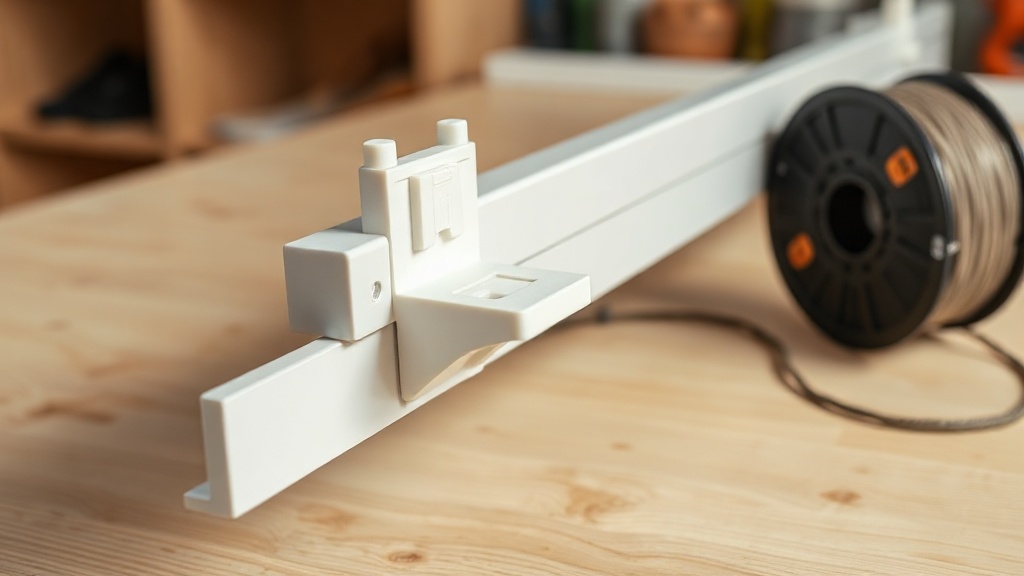

Missing IKEA Hardware? How to Replace Lost Plastic Parts with 3D Printing
After moving an IKEA wardrobe, a single small plastic clip that turns up missing from the box can render the entire piece of furniture useless on its own. Fortunately, a lost IKEA replacement part can usually be reproduced by 3D printing — measured directly from an intact example already on the furniture, with no trip to the store required. Glass shelf holders, shelf pins, door connection clips, and rear panel brackets are among the most commonly needed.
Which Parts Are Suitable for 3D Printing?
Most plastic fittings in IKEA furniture are small, geometrically straightforward, and carry limited structural loads — which makes them ideal candidates for FDM printing. Frequently requested parts include:
- Glass shelf holders: Small corner wedges that grip the edge of a glass shelf.
- Shelf pins (cylindrical supports): Parts that insert into holes in the side panel and bear the shelf.
- Connection and locking clips: Fittings that snap two panels together.
- Drawer slide stops and bumpers: Small pieces that enable a quiet, soft close.
What to Watch Out for When Taking Measurements
The best results come from measuring an identical part that is still intact on the same piece of furniture. For glass holders, carefully measure the slot that matches the glass thickness; for shelf pins, note the hole diameter and pin length; for rigid clips, pay attention to the flex tolerances. Because clips must flex slightly to snap into place, it is important that the chosen material can bend a little.
Material: Balancing Rigidity and Flexibility
The right material depends on the part’s function:
- Load-bearing, rigid parts such as shelf pins: PETG delivers good results in terms of toughness and durability.
- Repeatedly inserted and removed, flexing clips: Tougher materials that resist fracture, or orienting the layer direction perpendicular to the stress, are critical.
An important factor here is print orientation: if a clip is printed so that the force acts perpendicular to the layers, it becomes far more resistant to delamination between layers.
Color and Appearance
Most IKEA fittings sit inside the furniture, out of sight — so color is generally not a priority. Even so, neutral tones such as white, black, or grey blend well with most furniture.
You can take a few photos of the part you have on hand from different angles, add a few key measurements, and send everything to us via our quick order page. There is no need to write off an entire piece of furniture over one small fitting.



 Türkçe
 العربية
 Русский
 فارسی
فارسی Deutsch