
Massivit Targets 3D Printing in the Defense Industry with the RapidWings Composite Platform
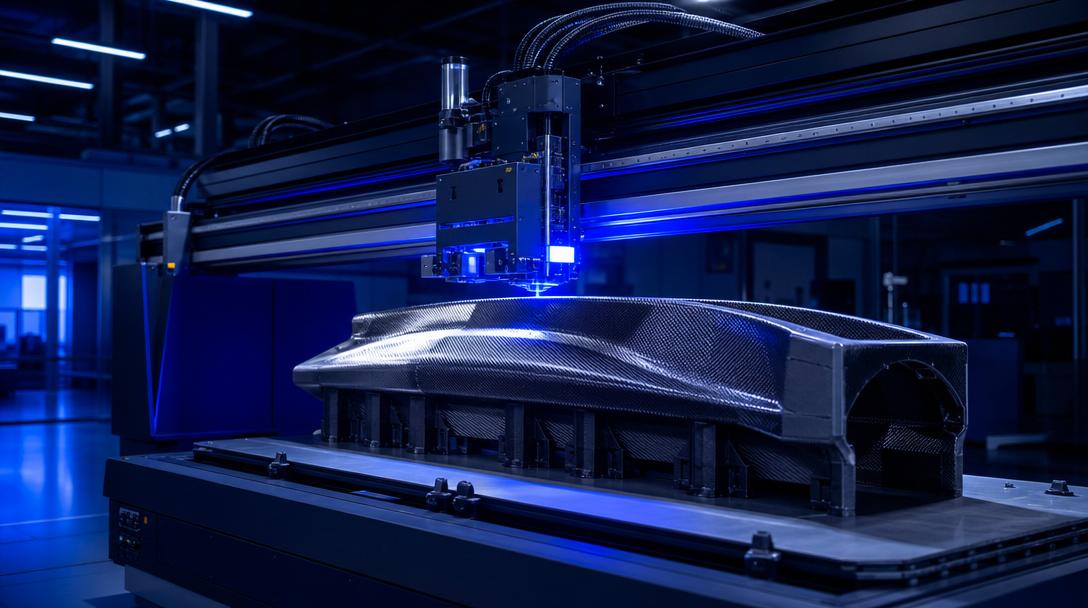
Massivit, known for its large-scale 3D printing solutions, has announced a new composite manufacturing platform for the defense industry called RapidWings. With this platform, the company aims to accelerate the production of large molds, fixtures and prototypes in the aerospace and defense sectors. Defense industry 3D printing applications have, in recent years, marked a critical threshold in the move from prototyping to series production.
What Does the RapidWings Platform Offer?
Massivit’s new platform focuses specifically on the direct production of large-scale parts using composite materials. The company states that mold and master pattern production, which takes weeks with traditional methods, can be reduced to a matter of days. The platform extends the company’s existing large-format FDM-like technology with materials and dimensions suited to defense standards. As a result, custom manufacturing processes for military vehicles and aerospace equipment become more accessible.
The Growing Role of 3D Printing in the Defense Industry
The defense sector increasingly views 3D printing as a strategic tool against supply chain vulnerabilities. Massivit’s move shows that large-format 3D printing is now starting to play a role not just in prototyping but also in operational part production. Earlier examples, such as the U.S. Air Force switching to 3D-printed parts on its C-17 fleet and Rheinmetall using FFF technology in the Challenger 3 program, reveal that this transformation is accelerating. FDM and large-format additive manufacturing offer cost and time advantages, particularly for low-volume, customized defense parts.
Defense and 3D Printing in Turkey
Domestically, 3D printing in the defense industry applications are spreading rapidly as well. Especially at the prototyping stage, FDM technology is frequently preferred in defense projects thanks to its low cost and fast turnaround. The investment of global players like Massivit in this field also paves the way for large-scale 3D printing among local defense suppliers. These developments in the sector are strengthening the place of FDM-based production in defense logistics.
As we also discussed in our guide titled the advantages of 3D printing in prototyping, additive manufacturing significantly shortens design validation and functional testing processes in defense projects. Rapid prototyping provides a critical competitive advantage in the development cycle of defense systems.
If you need a prototype or functional part for your defense project, you can get a fast quote from our online order page for production with the right material and tolerances.


 Türkçe
 العربية
 Русский
 فارسی
فارسی Deutsch