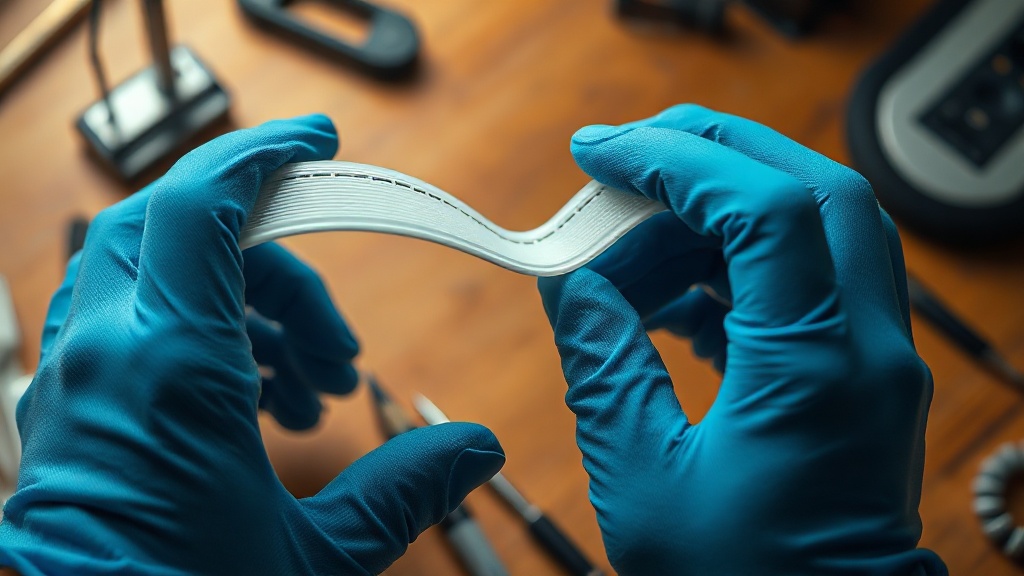

Live Hinge with FDM — Is It Really Possible? The Layer Orientation Secret
That thin connection that lets a box lid open and close repeatedly by flexing rather than rotating on a traditional hinge is called a live hinge. But can live hinge printing with FDM technology truly deliver a durable result, or is it destined to crack after just a few uses? The short answer: with the right material and the right layer orientation, it is absolutely possible — but every detail matters.
Why is a live hinge easy with injection moulding but hard with FDM?
With injection moulding using materials like polypropylene, a live hinge can survive millions of flex cycles because the material flows as a single, continuous whole. In FDM, however, the part is built up layer by layer. When the bending load acts perpendicular to the inter-layer bond lines, the hinge delaminates layer by layer within the first few movements. That is exactly where the secret lies.
Layer orientation determines everything
The flex axis of the hinge must be parallel to the layers. This means the thin flexing zone should experience tension that stretches along the material fibres, not tension that tries to tear the layer bonds apart. In practice, this usually means orienting the part so that the hinge axis lies parallel to the print bed — not printing it flat. We go deeper into this topic in our part orientation article.
- Material: Flexible, fatigue-resistant PETG, TPU, or especially PP deliver far longer hinge life than rigid PLA.
- Hinge thickness: Typically a thin cross-section of 0.3–0.6 mm; too thick and it won’t flex, too thin and it tears immediately.
- Initial flex cycles: Working the hinge by hand a few times while the print is still warm — or right after printing — aligns the fibres and extends hinge life.
- Corner softening: Adding small fillets to the hinge transitions reduces stress concentration and the initiation of cracks.
Realistic expectations
You should not expect injection-moulding quality with infinite life from an FDM-printed live hinge. However, with the right material and orientation, hundreds — sometimes thousands — of flex cycles are a fully achievable target. For single-use lids, packaging prototypes, and low-frequency applications, this is more than sufficient.
At our workshop in Sile/Istanbul, we work with 17 different materials and can evaluate the best option for functional parts like these together. If you have a design with a hinge, share your file via our order page for a quick quote and we will be happy to advise on layer orientation and material selection.


 Türkçe
 العربية
 Русский
 فارسی
فارسی Deutsch