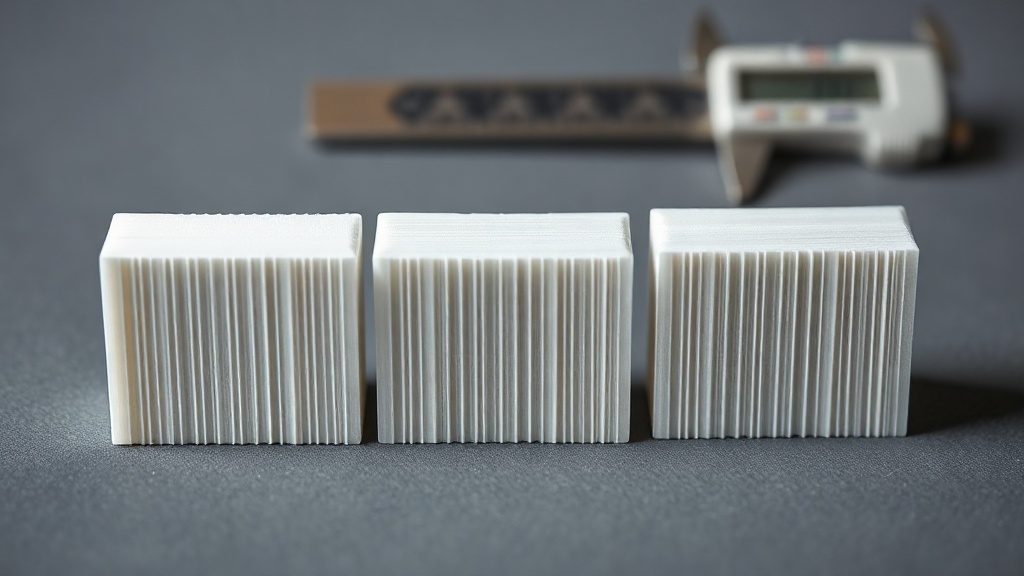

Layer Height Selection: Comparing 0.12, 0.20 and 0.28 mm
Same model, same material, same printer — yet two prints look completely different. Most of the time the difference comes down to a single setting: layer height. Choosing the right layer height determines a part’s surface quality, print time, and to some extent its strength — all at once. In this post we compare the three most commonly used values: 0.12, 0.20, and 0.28 mm.
What Exactly Is Layer Height?
In FDM printing, a model is built up from successive layers of melted plastic. The thickness of each layer is the layer height. As the value decreases, the number of layers increases and the surface becomes smoother — but the print takes proportionally longer. That is why choosing a layer height is always a balancing act.
0.12 mm: Fine Detail
Ideal for miniature figures, jewelry, and parts with intricate surface features. The staircase effect (stepping) on curved surfaces is significantly reduced. The trade-off is that print time can roughly double compared to 0.20 mm, which raises costs for large parts.
0.20 mm: The Balanced Default
This is the sweet spot for most functional and visual parts. It combines acceptable surface quality with a reasonable print time. If you are unsure where to start, this is the value to go with.
0.28 mm: Fast and Sturdy
Suitable for prototypes, internal mechanical parts, or large objects where surface finish is not critical. The wider bonding area between thicker layers often makes the part feel more robust; however, fine features such as small text and sharp details can be lost.
How Should You Decide?
To simplify the decision, ask yourself these questions in order:
- Will the surface of the part be visible, or will it be hidden inside a mechanism?
- Does it have fine text, a logo, or sharp detail?
- How much of a priority are time and cost for you?
As a general rule: 0.12 mm for visible, detailed parts; 0.20 mm for the majority of everyday jobs; 0.28 mm for fast, durable prototypes. You can see how cost varies with scale on our production pricing page.
If you are not sure which layer height suits your part, send us your file and we will select the best setting together based on its purpose.



 Türkçe
 العربية
 Русский
 فارسی
فارسی Deutsch