
I Don’t Have an STL File – Can I Still Get 3D Printing?
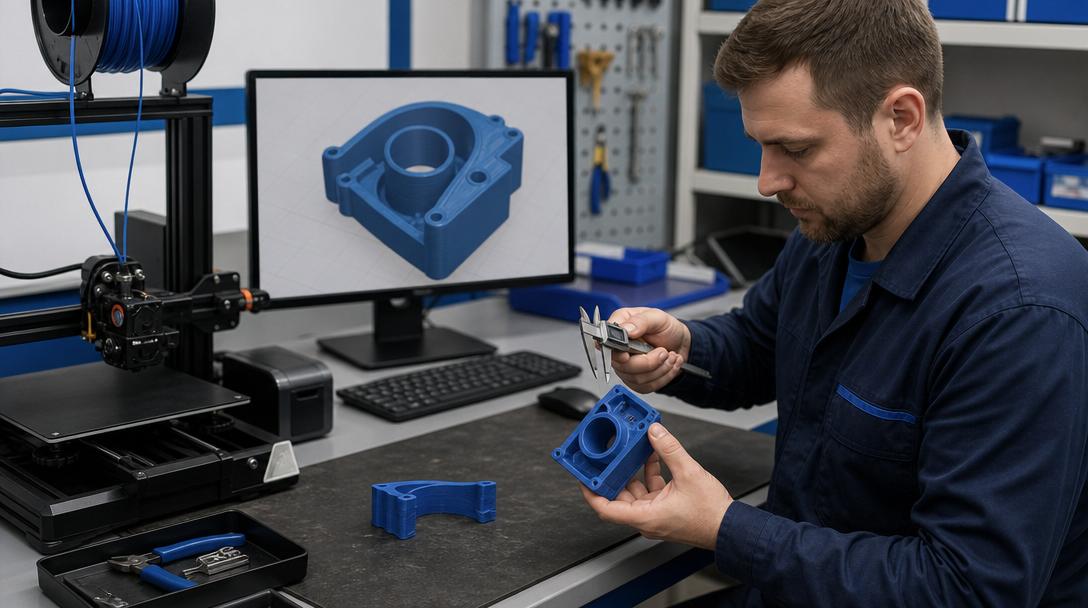
If you’re asking I don’t have an STL file – can I still get 3D printing done, the short answer is yes. A model can be prepared from measurements, a photo, a simple sketch, or even a broken sample part you have on hand; what matters is clearly explaining where the part will be used and which dimensions are critical.
How does the process work without an STL file?
In 3D printing, production starts directly from a digital model, but that model doesn’t necessarily have to be prepared by you. Especially for items like a lost cover, a broken hinge, a custom bracket or a box, the need is described first and then turned into a model. At this point, you can start the process with Ucuz3D based on photos and measurements by requesting a quote right away.
If you have a physical sample on hand, the job becomes even easier. Even if it’s broken, a reference part provides very valuable information about hole positions, the type of connection and the seating surfaces. Especially for work that needs a broken plastic part 3D printing solution, understanding the original part’s logic of use is often more important than the file itself.
Which details speed up the job?
If you don’t have an STL file, you need to provide data that is as clear as possible so the process moves quickly and accurately. Instead of a single blurry photo, images taken from several angles, measurements taken with a ruler or caliper, and information such as what load the part carries will significantly shorten the design time. If you’d like to better understand the reverse-modeling logic, the 3D Scanning and Reverse Engineering guide is a good starting point.
- Overall dimensions: Width, length, height and, if needed, wall thickness.
- Critical areas: Points that must fit exactly, such as a screw hole, a snap tab, a cable outlet or a shaft diameter.
- Use case: Indoor or outdoor, does it see heat, does it take impact?
- Preferred material: If you’re unsure, PLA, PETG, ASA, TPU or engineering filaments can be recommended based on where it will be used.
This information makes it easier not only to draw the model but also to select the right FDM material. For example, a desktop cover and a bracket that will work under the sun may not be solved with the same material. When strength and temperature requirements increase, printing with engineering materials gives a more accurate result.
In which cases is remodeling a must?
Some parts simply can’t be copied, because in FDM printing the layer direction, wall thickness and tolerance behavior differ from injection-molded parts. A thin tab, a narrow clip or a connection point under continuous load often requires small print-friendly revisions rather than an exact copy. For this reason, the approach of “a print-friendly version that does the same job” is healthier than “identical to the original.”
Especially in spare-part and prototype work, a quick test print is taken first, then the dimensions are revised if needed. This reduces both time and material loss. Once the part is finalized and the model file is ready, if you’d like to see a price you can quickly view the production cost with the calculate the price instantly step.
Conclusion: No file doesn’t mean the process is over
In short, you can get 3D printing done even without an STL file; as long as you correctly describe the part’s function, dimensions and conditions of use. A photo, a sample part or even a simple drawing is often enough to start most projects.
If all you have is a broken part or a rough idea, you can share it with clear measurements and ask Ucuz3D for a production-ready roadmap. This way, instead of needless trial and error, you reach the result faster with the right material and the right model.


 Türkçe
 العربية
 Русский
 فارسی
فارسی Deutsch