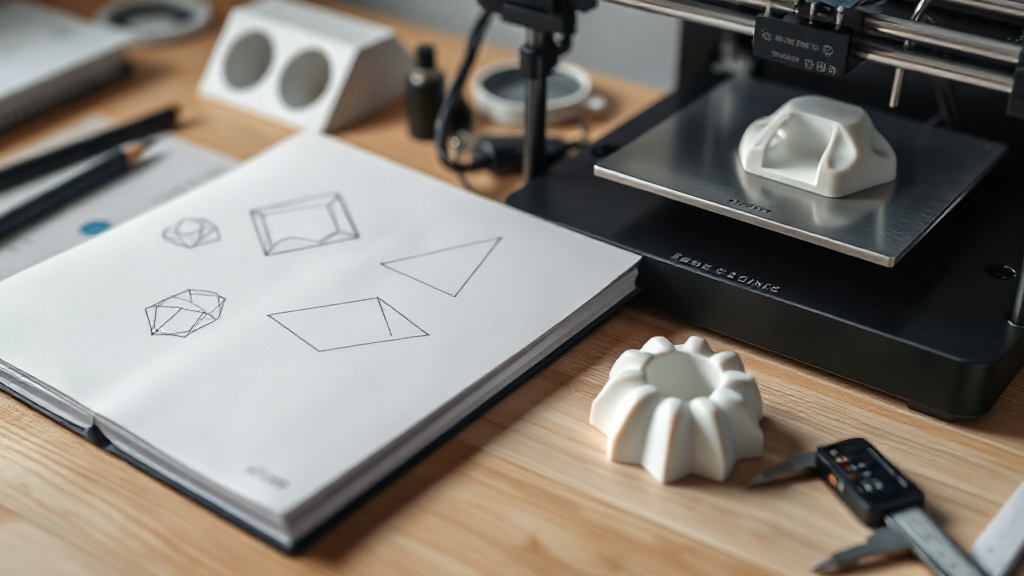

Design for 3D Printing: A Beginner’s Guide
Designing for 3D printing requires a different set of rules compared to traditional manufacturing. The most fundamental difference: parts are built layer by layer, so print orientation determines both strength and surface quality. Tensile loads applied perpendicular to the layers can cause the part to fail through layer delamination.
Key considerations when starting out: make wall thicknesses a multiple of the nozzle diameter (0.8–1.6 mm for a 0.4 mm nozzle), avoid overhangs steeper than 45 degrees or use chamfers instead, give the part a wide, flat base on the build plate, and add a radius to sharp internal corners.
If you have any doubts before sending your design, feel free to ask us — Ucuz3D’s design support service checks your file for print-readiness free of charge.


 Türkçe
 العربية
 Русский
 فارسی
فارسی Deutsch