
Can a 3D-Printed Part Be Painted? How to Paint It
Yes, 3D-printed parts can be painted, and with the right techniques you can achieve remarkably professional results. To hide the layer lines left on the surface of an FDM print and give it the color and texture you want, you simply need to follow the 3D printing painting process step by step. In this article we explain every stage in plain language, from sanding and priming to paint selection and protective varnish.
Why Paint 3D-Printed Parts?
Layer lines are unavoidable in FDM printing. Beyond hiding these lines, painting gives a part the following benefits:
- Professional look: With matte, satin or glossy surface options you get a display-ready finish.
- Protection: A UV filter or varnish layer protects the part against sunlight and moisture.
- Color freedom: You are no longer limited to the colors the filament offers and can paint the part any color you like.
- Branding: For logoed, two-tone or custom-patterned parts, painting is the most practical route.
Preparation Before Painting
The secret to a successful paint job lies in surface preparation. If an FDM part has layer lines, small imperfections or support marks, paint will not hide these flaws; on the contrary, it will make them more visible. That is why you need to smooth the surface first.
1. Sanding
Apply progressive sanding to remove the layer lines. Take off the large ridges with coarse sandpaper (120-150 grit), then smooth the surface with medium (220-320) and fine (400-600) grits. This method works well on common materials such as PLA, PETG and ABS. To find out which material suits your project, you can review our printing materials.
2. Primer
Applying a coat of primer after sanding helps the paint adhere evenly to the surface. Filler primer also covers fine layer lines, providing a flatter surface. Apply it in thin, even coats and mind the drying time between each coat. After priming, prepare the part for paint with a light fine sanding (600-800 grit).
Painting Techniques: Spray and Brush
You can choose between two basic painting methods:
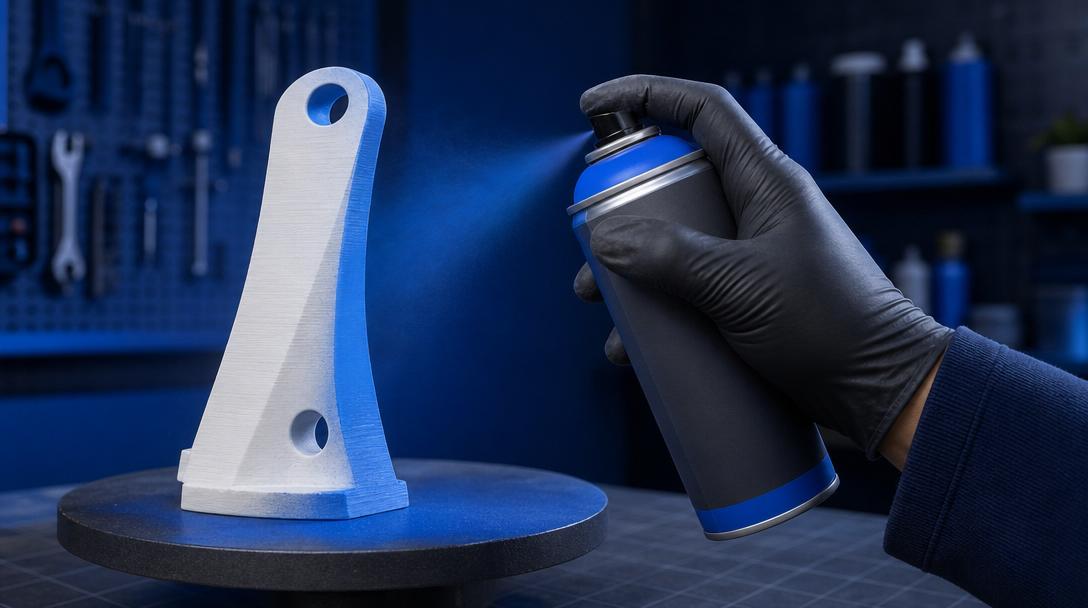
- Spray paint: Ideal for a smoother, more even surface. Apply in thin coats from 20-30 cm away from the part. Acrylic spray paints work well on FDM parts. Wait 10-15 minutes between coats.
- Brush painting: Suitable for small, detailed parts or touch-ups. Acrylic paints should be preferred, thinned and applied in thin coats. To avoid leaving brush marks, you can apply the final coat with very slightly thinned paint.
Protection and Varnish
Once painting is complete, it is recommended that you apply a coat of varnish to protect the part. You can choose from matte, satin or glossy varnish options according to the finish you want. Varnish protects the paint against scratches and UV rays, while also making the part more durable for everyday use.
Painting may look like a lot of work, but when you follow the steps in order the result will surprise you. If you want to choose the right material and surface for your project, or get a professional 3D printing service directly, you can upload your design and calculate its price instantly. For more detailed information, take a look at our Post-Processing guide as well.



 Türkçe
 العربية
 Русский
 فارسی
فارسی Deutsch