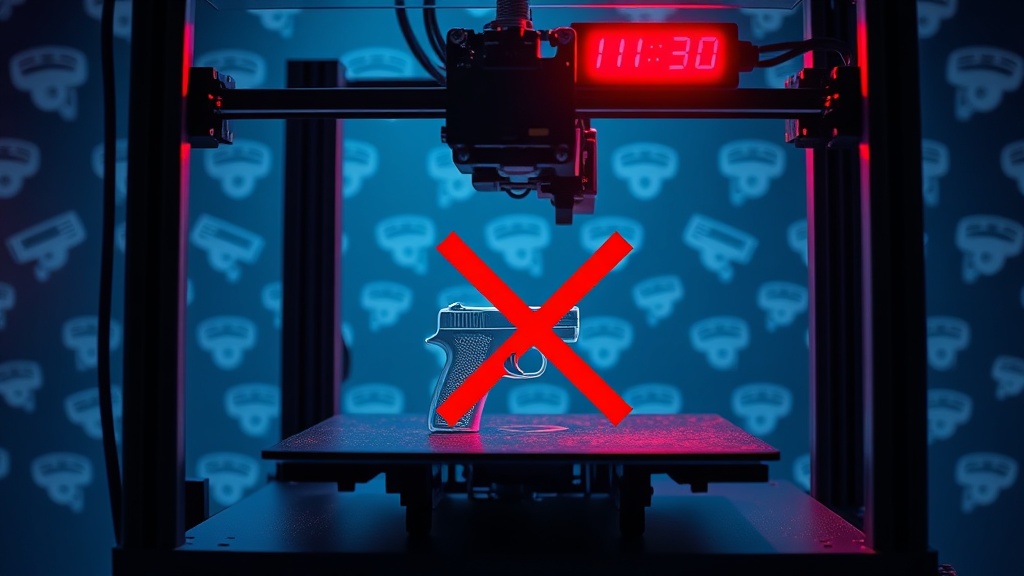

California’s 3D Printer Surveillance Bill AB 2047: What Awaits Makers?
The California State Assembly has passed a controversial bill targeting 3D printers. Known as AB 2047, this regulation aims to require traceability and censorship software on all 3D printers sold. The Electronic Frontier Foundation (EFF) is running a campaign against it, arguing that the bill is unenforceable and threatens maker culture.
What Does AB 2047 Aim to Do?
The bill was drafted on the grounds of preventing the use of 3D printers in weapons manufacturing. According to the EFF, however, this justification is not realistic: unlicensed firearm production is already illegal, and making such items with 3D printers is extremely rare. Despite this, the bill places every 3D printer user in the position of a potential criminal.
The Requirements the Bill Introduces
If it takes effect, AB 2047 would mandate the following:
- Every 3D printer must include censorship software that blocks the printing of certain files
- Using alternative open-source software would be treated as a crime (only open-source versions that include the censorship software would be permitted)
- Manufacturers would have to collect user data and report it to the authorities
Why Is It Drawing Backlash?
The EFF highlights three core problems with the bill. First, the mandated censorship technology simply doesn’t work on a technical level — it’s impossible to stop determined users from bypassing these safeguards. Second, the exemption granted to commercial users lets large studios buy high-priced “unrestricted” printers while individual makers are held back. Third, the performance criteria were continually lowered throughout the drafting process, reducing the goal from “effective blocking” to a vague target like “making predictable circumvention harder.”
In an interesting twist, the entertainment industry was brought under the commercial exemption. This means a film studio can use a 3D printing service to produce props and costumes, while an individual designer using the same printer faces restrictions. This double standard is generating significant backlash within the maker community.
What Can Makers Do?
The EFF is calling for people to reach out directly to California senators to oppose the bill. The bill has not yet become law; it is awaiting debate in the state senate. During this period, it’s critical for the maker community to make its voice heard. If AB 2047 becomes law, there are concerns that similar regulations could spread to other states and countries.
For makers and 3D printing users in Turkey, this development serves as an important warning about the future of the industry. If you want to produce your own prototypes, spare parts, or custom projects without restrictions, turning to a reliable online 3D printing service is the smart move. You can get an instant quote for the part you need and order right away, receiving professional FDM printing with no software restrictions whatsoever.
For more on the future of 3D printing technology, take a look at our guide to the history of 3D printing.




 Türkçe
 العربية
 Русский
 فارسی
فارسی Deutsch