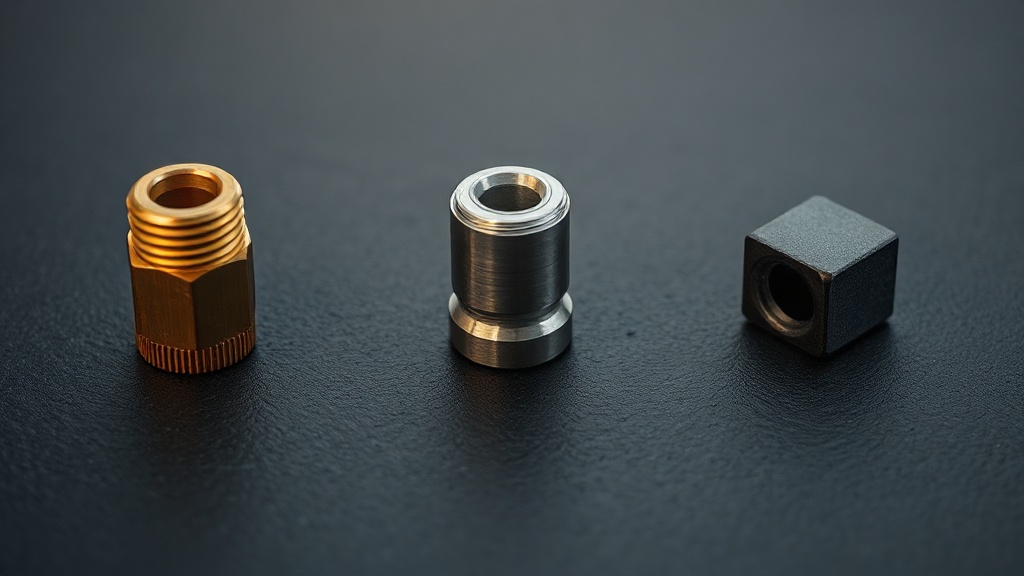

Brass, Hardened Steel, or Tungsten? A Nozzle Material Guide
When you try to print a carbon-filled filament through a standard brass nozzle, you can notice visible wear on the tip within just a few hours. This is exactly where hardened steel nozzles and tungsten carbide options come into play. Choosing the right material means both saving money and maintaining consistent print quality.
Brass: Standard and Practical
Brass conducts heat very well, making it still the most sensible choice for non-abrasive materials like PLA, PETG, ABS, and TPU. It heats up quickly, maintains smooth flow, and is affordable. Its only weakness is that it is soft; it wears down quickly when used with filaments containing hard fillers such as glass fiber or carbon.
Hardened Steel: The Durable Middle Ground
Hardened steel nozzles are the most common solution for working with abrasive filaments. They last much longer than brass, though their thermal conductivity is slightly lower, so you may need to raise the temperature by a few degrees. Typical use cases include:
- Carbon fiber-filled PLA, PETG, and nylon
- Glass fiber-reinforced engineering filaments
- Metal or wood-filled decorative filaments
- High-temperature engineering materials
Tungsten Carbide: Maximum Longevity
Tungsten carbide nozzles are at the top when it comes to hardness and retain their sharpness for a very long time even with the most abrasive materials. The cost is high, and since their thermal behavior differs, temperature calibration requires care. For workshops that continuously print with heavily filled filaments, the investment pays for itself.
How Do You Decide?
Your material determines the choice: there is no reason to move away from brass for non-abrasive filaments; if you occasionally print with carbon or glass fiber, hardened steel is a balanced option; if you use such filaments daily, tungsten is the most economical long-term decision.
In our workshop, because we work with a wide range of materials, we keep nozzle sets suited to each filament group — this allows us to produce technical parts with the right nozzle, without dimensional deviation. If you are undecided about material selection or would like a quote, you can reach us through our open order page.
Before your next technical print, check whether the filament you will be using is abrasive; choosing your nozzle material accordingly will keep your printing experience enjoyable for a long time.


 Türkçe
 العربية
 Русский
 فارسی
فارسی Deutsch