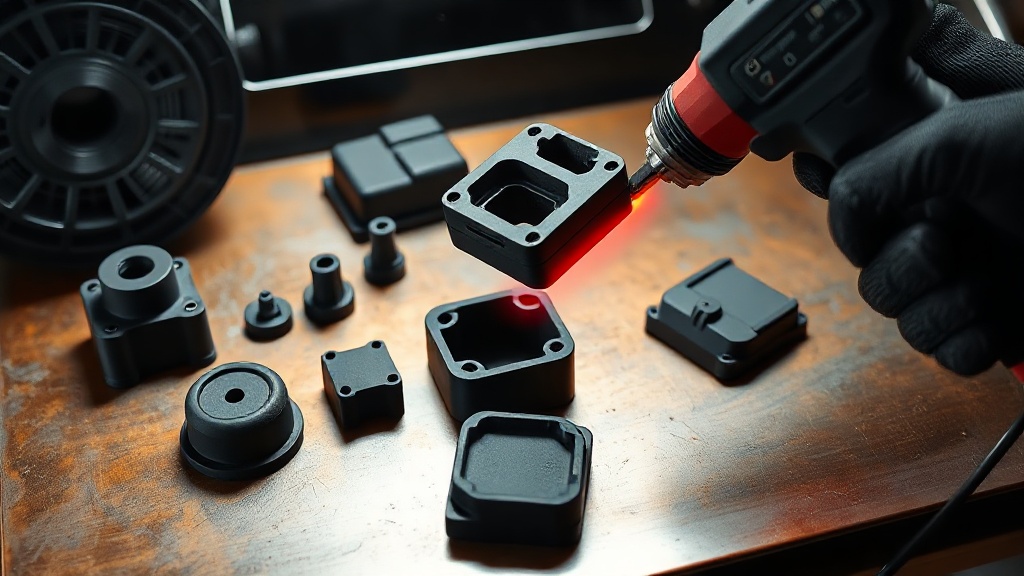

ABS Filament Guide: Durability and Heat Resistance
ABS is the engineering plastic you encounter everywhere — from LEGO bricks to automotive interior components. Thanks to its heat resistance approaching 100°C, high impact strength, and machinability, it has long been the go-to choice for functional parts.
Printing with ABS is more demanding than with PLA: it requires a nozzle temperature of 230–260°C and a bed temperature of 90–110°C. Because it shrinks noticeably as it cools, an enclosed print chamber is almost essential. Ventilation is also recommended due to the fumes produced during printing.
One distinct advantage of ABS is that it can be post-processed with acetone: parts can be vapor-smoothed for a glossy finish or chemically bonded with acetone glue. For applications requiring mechanical strength and heat resistance, ABS remains a powerful option.




 Türkçe
 العربية
 Русский
 فارسی
فارسی Deutsch