
A Safety Focus for PLA Filament: What Does Bambu Lab PLA Pure Tell Us?
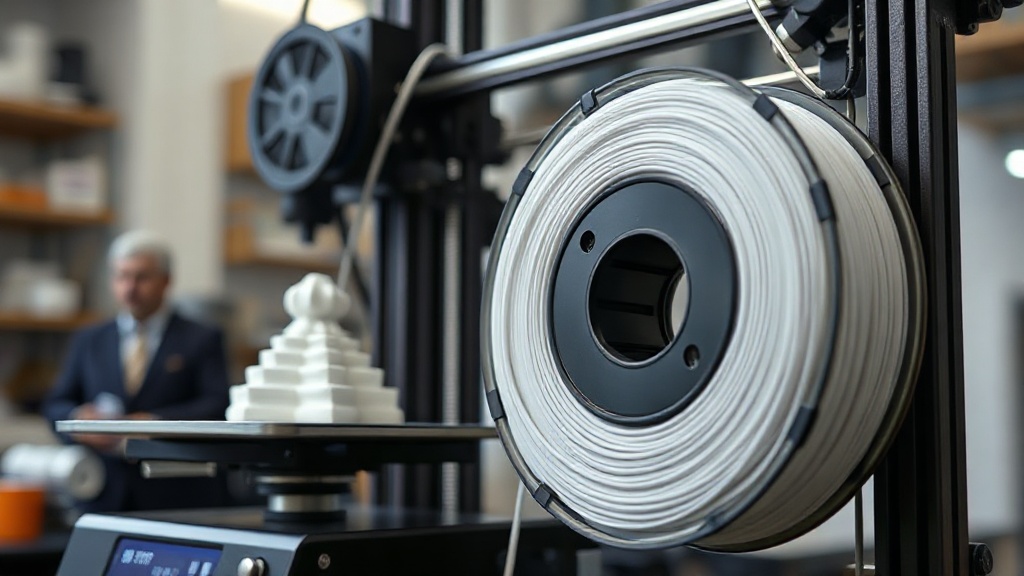
On the PLA filament side, Bambu Lab PLA Pure, announced on June 18, stands out as a new material move that highlights both safety and ease of use together. What makes it newsworthy isn’t simply that another PLA has been released; it’s that themes such as low emissions, toy safety and cleaner surface quality are brought together in a single product.
According to information shared on DEVELOP3D, PLA Pure arrives with a positioning that references UL 2904 GREENGUARD certification for indoor air quality, EN 71-3 compliance on the toy-safety side, and certain food-contact regulations. On top of this, the brand emphasizes less stringing, a cleaner surface and mechanical performance close to the standard PLA class. For FDM users this trio matters, because in desktop and small-batch production scenarios the question is no longer just whether the material prints, but how well suited it is to its end-use environment.
Why does this news matter?
Until now PLA has mostly been described as an “easy-to-print starter material.” Yet today many teams use PLA not only for hobby parts but also for concept models, presentation prototypes, training aids, low-load enclosures and visual-validation parts. That is why claims of lower emissions, a cleaner surface and more controlled content become a direct part of the production-quality conversation.
The behavior of the material gains importance especially when FDM production takes place in offices, schools, workshops and enclosed work areas. The critical point here is this: a filament that carries a safety claim does not automatically make the final part suitable for every use; print temperature, nozzle cleanliness, post-processing and the use-case scenario must still be evaluated separately. Even so, products like this show that material choice in the FDM ecosystem is now discussed not just in terms of color and price, but in terms of application context.
What does this mean in practice for Ucuz3D?
On the Ucuz3D side, within our FDM-focused production approach, material selection is made according to the part’s intended use. For work such as visual prototypes, lightweight functional parts or training models, choosing the right PLA is still a very strong solution. If you want to see the material options in a broader frame, you can review our 3D printing material options.
This news is also a reminder that a part’s success doesn’t depend solely on it coming off the printer; the right material, the right geometry and the right print settings must be considered together. To see more clearly which scenarios the PLA family makes sense for, the PLA Filament: Properties, Advantages and Areas of Use guide is a good starting point.
Who should watch this development closely?
- Teams producing educational and demo models
- Product-development teams that frequently make prototypes in enclosed office environments
- Designers who want clean surfaces and less post-processing
- Startups working on toys, presentation models or user-facing prototypes
In short, the Bambu Lab PLA Pure news shows that the perception of “PLA is already a simple material” is now behind us. On the FDM side, users now want emissions, safety, surface quality and process ease all at once. This means that in the coming period we may see more certification, clearer application distinctions and more purpose-driven filament development in the PLA segment.
If you too are planning a PLA-based prototype, presentation model or low-load functional FDM part, request a quote now and let’s pin down the most suitable material for your application together.



 Türkçe
 العربية
 Русский
 فارسی
فارسی Deutsch