
A New Step for Flexible TPU 3D Printing: What the Snapmaker TPU 90A Filament Tells Us
Flexible TPU 3D printing recently saw one of its notable developments: the new TPU 90A filament Snapmaker introduced for its U1 ecosystem. The news matters because this softer, shock-absorbing, wearable-friendly material clearly shows how the need for flexible parts, protective components and low-volume functional prototypes is expanding on the desktop FDM side.
Why is Snapmaker’s TPU 90A announcement drawing attention?
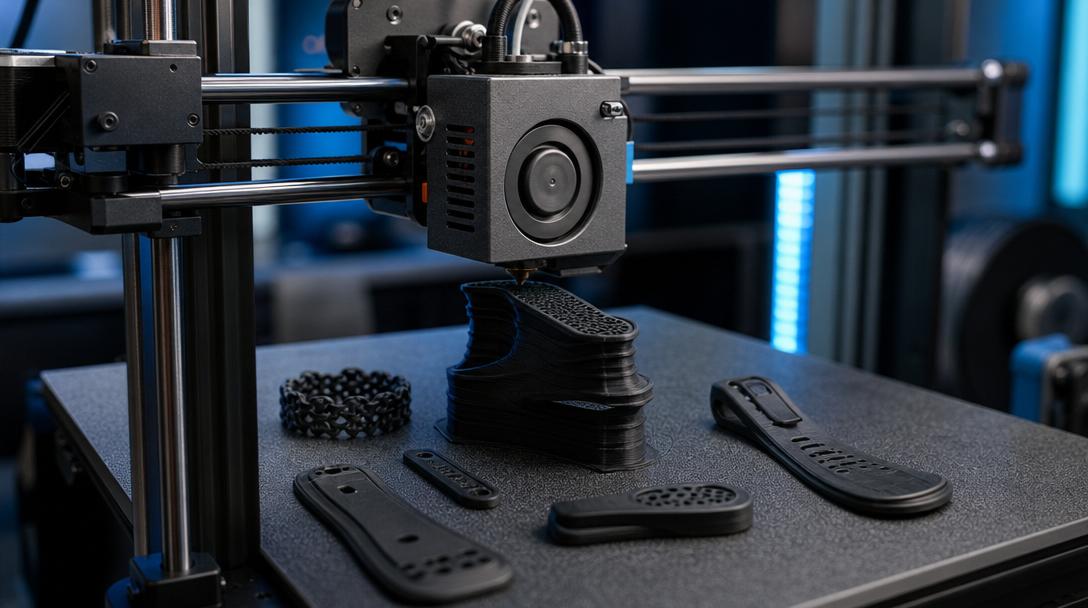
According to the announcement dated June 25, 2026, Snapmaker added the softer-natured TPU 90A alongside its existing TPU 95A option. The Shore 90A hardness level helps the material flex more after printing and dampen impacts better. The company specifically highlights use cases such as insoles, protective pads, in-packaging support parts, grip surfaces, device feet and watch straps.
This shouldn’t be read as just another filament launch. In the FDM world, flexible materials often sit in the “hard to print but extremely valuable in the right place” category. As manufacturers offer flexible filaments with more accessible profiles, clearer usage limits and automation support, the move from prototype to end-use part accelerates. At Ucuz3D, our TPU flexible printing service offers a meaningful solution for similar needs, especially for parts that absorb impact, require grip or call for slight flex.
What changes technically?
The key point in the news isn’t only that the material is “softer”; it’s also described with a controlled workflow. Snapmaker recommends a nozzle temperature of 210-240 °C and a print speed of 30-50 mm/s for TPU 90A. It also advises against using a 0.2 mm nozzle, suggests loading the filament manually rather than automatically, and recommends drying it for about 6 hours at around 70 °C before printing. These details show that, with flexible filaments, process knowledge is as important as the material itself.
- Softer structure: more flex and impact damping compared to TPU 95A.
- Moisture sensitivity: TPU is hygroscopic; without drying, surface quality and layer adhesion can drop.
- Speed limit: controlled printing instead of high speed delivers more reliable results.
- Application focus: better suited for areas like insoles, pads, holders, feet and wearable parts.
Another interesting detail is the multi-material printing side. On the U1, TPU 90A can reportedly be combined with PLA, PETG, PA and PET; for materials that bond more weakly, a mechanical interlocking approach is used. By contrast, the company stresses that structural bonding with ABS, ASA and PC requires caution. For teams developing flexible-rigid hybrid designs, this distinction is highly valuable in practice.
What does this news mean for Ucuz3D?
This development shows that flexible parts are now more visible not only on the hobby side, but also in functional prototypes, small-batch fixtures and user-contact product components. Especially in jobs like device feet, vibration dampers, cable protectors, soft-touch surfaces or custom holders, material choice directly affects the outcome. If you’re not sure whether your part really needs to flex, the best approach is to first check the TPU and flexible filaments: where are they used? guide, then evaluate geometry and hardness according to your needs.
In short, Snapmaker’s TPU 90A announcement shows that flexible FDM materials are maturing with clearer use cases. If you’d also like to try a gasket-like, shock-absorbing or grip-focused part in low volume, you can quickly clarify the right production route by sending your model through the request a quote now flow.


 Türkçe
 العربية
 Русский
 فارسی
فارسی Deutsch