
A New Move for PLA Filament: What Does Dow’s Tougher-Material Message Mean for Prototype 3D Printing?
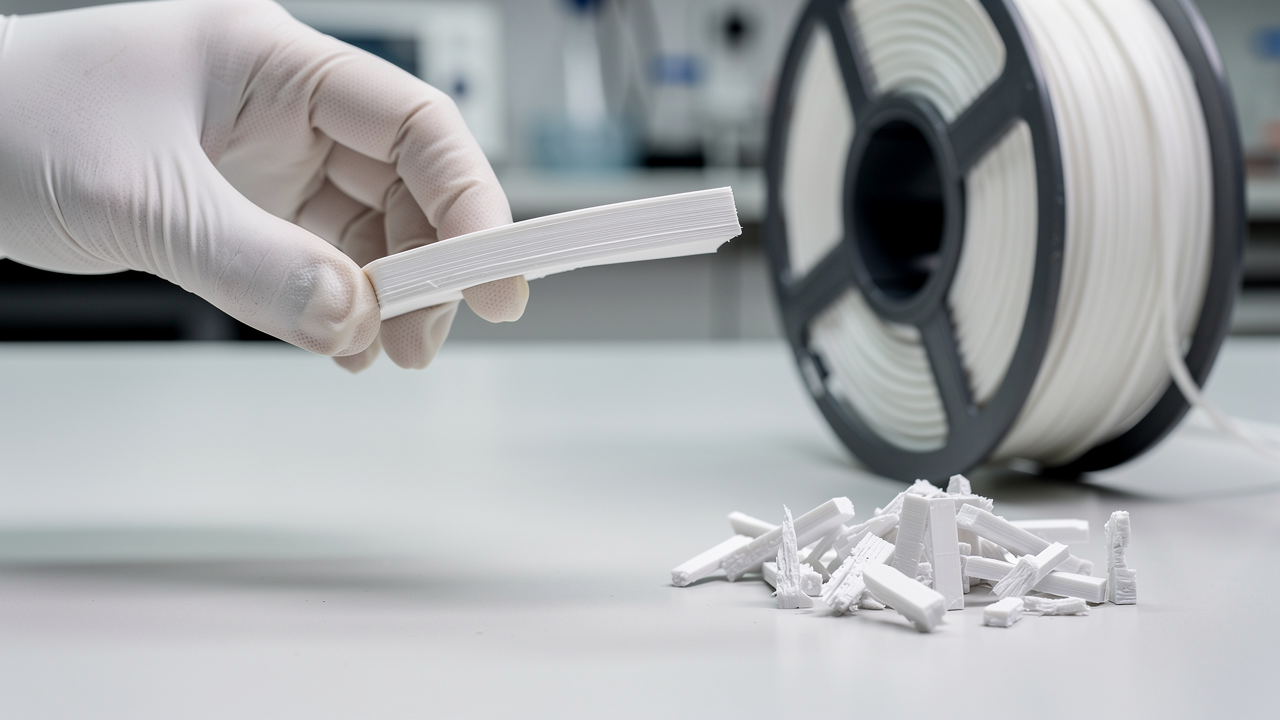
The Dow news that stood out on the PLA filament side on June 24 shows that the expectation of tougher, more reliable FDM parts is back on the agenda. In short, the message is clear: PLA is being repositioned not just as an easy-to-print starter material, but as a more robust option for prototype 3D printing in the right scenario.
This development matters especially for companies that need product validation, desktop prototypes, fit-and-assembly trials and visual samples. Because what is needed most often in the field is not always the highest heat resistance; it is fast iteration, a clean surface finish and reduced brittleness in test parts. At Ucuz3D, when assessing your part requirement, it is wiser to base the material decision not solely on “the toughest one” but on service life, impact risk and print speed. If you want to turn it into an order, the request a quote now page speeds up this process.
Why does it matter?
PLA has long stood out for its accessibility and ease of printing; but for many users the main question was always the same: “Will the part hold up well enough?” The tougher PLA approach Dow emphasises speaks directly to this perception. The critical point here is not a claim that PLA will replace engineering plastics in every application. The real message is that, with the right geometry and the right use scenario, PLA filament now deserves to be taken more seriously in more functional prototypes too.
- It enables a faster decision cycle in low-volume prototypes.
- It can strike a better balance between a clean appearance and function in presentation, sample and demo parts.
- It can postpone an unnecessary material upgrade during initial product validation.
The term “toughness” is especially important here. In FDM printing, the problem users face is often not just fracture under static load; it is corner knocks on samples that pass from hand to hand, cracking during assembly, or weakness in repeatedly tested clip-like details. That is why the tougher PLA message should be read not as replacing engineering materials, but as a signal that can slightly expand PLA’s role in early-stage product development.
What does it mean in practice for Ucuz3D customers?
If your goal is a sample to hold in hand, an enclosure, a prototype for assembly checks or a short-term-use fixture, PLA is still a very strong candidate. At this point, among our 17 material options you should choose not by technical data alone but by the part’s real use scenario. If you want to see PLA’s limits and suitable areas of use more clearly, the PLA Filament: Properties, Advantages and Areas of Use guide is a good reference.
On the other hand, if the part will stay under the sun, be exposed to in-car temperatures, needs to flex or will carry continuous mechanical load, alternatives such as PETG, ABS, ASA, TPU or nylon may be more appropriate. That is why the news, rather than declaring a single material suitable for every job, suggests that developments on the PLA side broaden the options at the prototype stage. Especially for teams doing rapid product development, this can open a new window in the cost-and-time balance.
In conclusion, Dow’s tougher PLA message reminds us that the summary “easy to print but brittle” is no longer sufficient in every case in the FDM world. If you are planning a new prototype, enclosure or low-volume part, the healthiest approach is to first clarify the conditions of use and then proceed with the right material.



 Türkçe
 العربية
 Русский
 فارسی
فارسی Deutsch