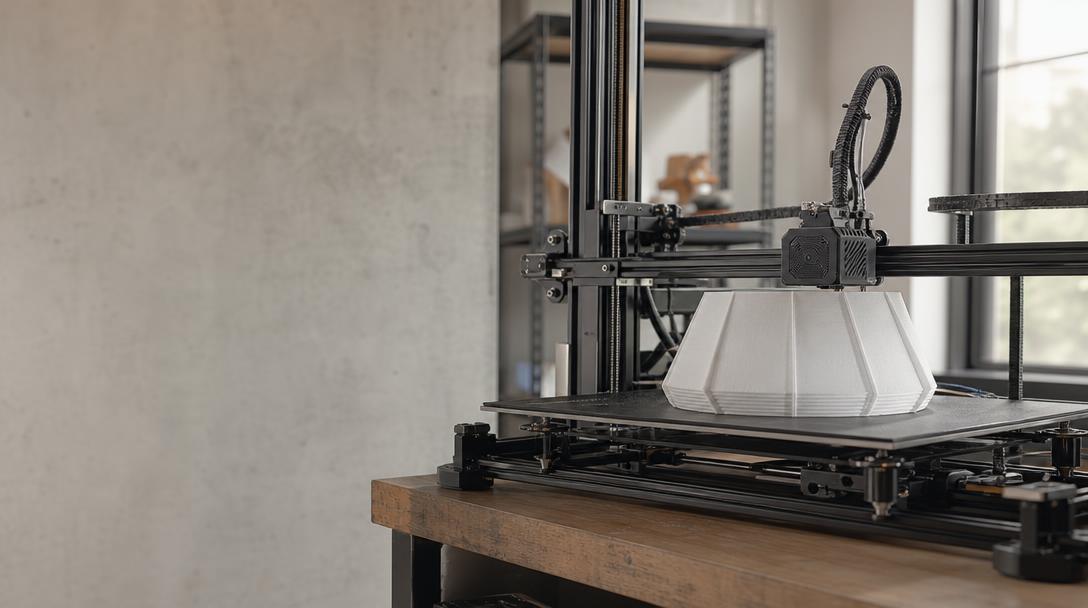

Why Do Prusament Pellets Matter? The Granule Era in Large-Format 3D Printing
The announcement of Prusament Pellets has brought renewed attention to the fact that raw materials for 3D printing are not limited to filament spools. On October 13, 2026, Prusa Research announced that it would offer polymer pellets in small batches for laboratories and large-format manufacturing. This does not mean desktop FDM printing is being replaced; it is more a step towards making pellet extrusion and material testing more accessible.
What do Prusament Pellets offer?
Polymer pellets are a widely used raw material in plastic manufacturing. Filament is also made by melting pellets and forming them into strands of a specific diameter. The new aspect of Prusa’s announcement is that this raw material can be obtained in smaller quantities for large-format 3D printers that use pellets directly, or for small-scale research and development projects.
The company notes that traditional suppliers often sell resin in batches of hundreds of kilograms or even tonnes, creating a barrier for smaller teams. According to the announcement, the pellets will be supplied pre-dried in containers of up to 14 kilograms. This could mean that a laboratory or workshop would not need to acquire a large stock of raw material just to run tests. The details of this approach and the polymers available depend on the latest information on the product page.
How does pellet printing differ from filament FDM?
In a filament-based FDM printer, material is pulled from a spool and melted in the nozzle before being deposited layer by layer. In pellet-based systems, raw material is fed directly into a hopper; the extruder melts the pellets and delivers the material to the print head. This method may be considered for large parts and applications requiring a high material flow rate. However, pellet printers do not necessarily offer the same ease of use or workflow as desktop systems that use filament.
Using pellets does not, by itself, guarantee cheaper printing. The result depends on the equipment, extrusion control, material dryness, part geometry and production volume. So it would not be accurate to assume that the cost advantages mentioned in the announcement apply to every part or user. Filament-based FDM may still be practical, especially for small parts and everyday prototypes; pellet printing, meanwhile, depends on having suitable equipment and production needs.
Who is this development relevant to?
The product announcement is primarily aimed at three groups: operators of large-format printers, research teams experimenting with polymers, and small-scale development units evaluating new material blends in their manufacturing processes. The option of smaller batches could reduce supply barriers for teams that need limited quantities of raw material for research or prototyping. However, users should separately verify that the pellets are compatible with their printer’s feeding and extrusion setup.
- Large parts: High-volume production scenarios can be explored with systems suited to pellet extrusion.
- Material research: Small batches can limit the risk of excess stock during testing.
- Desktop filament printing: Pellets are not a consumable that can be installed directly in existing filament printers.
Prusa’s move is best understood as a supply initiative to make polymer raw materials available in more accessible quantities—not as a sign that all FDM users will switch to pellet printing. If you need a prototype, fixture or spare part made with filament, you can explore 3D printing services and consider which option among the printing materials is suitable for your part. If your model is ready, you can estimate the cost of an FDM part with the 3D printing price calculator. You can also read the guide to how a 3D printer works for a refresher on the basics of filament-based production.



 Türkçe
 العربية
 Русский
 فارسی
 Deutsch