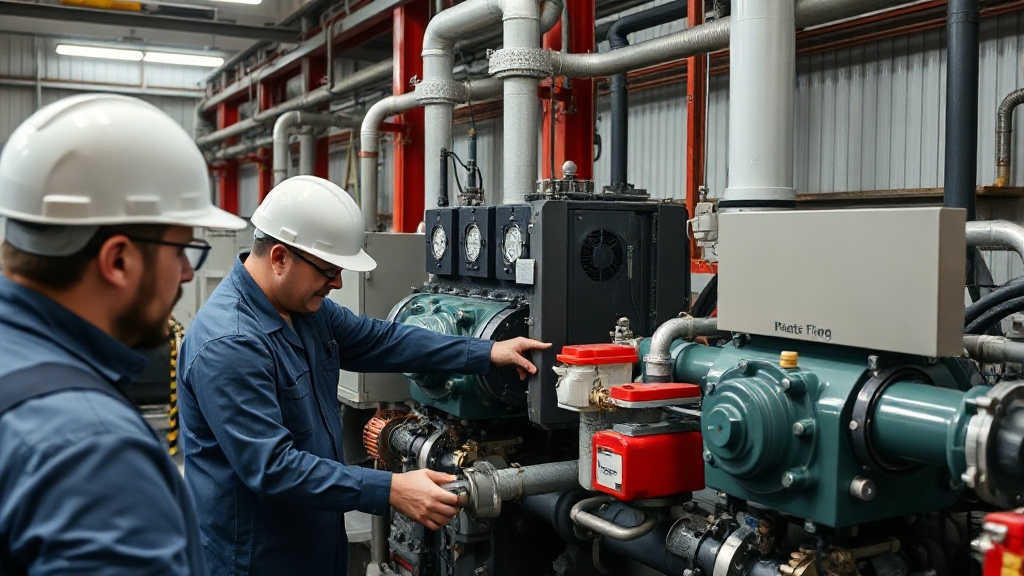

US Navy Modernizes Boiler Monitoring System with Additive Manufacturing
Modernization through additive manufacturing is back in the spotlight with news from NAVSEA dated June 11, 2026. NSWCPD engineers updated a boiler monitoring system using additive manufacturing, showcasing the genuine field value of 3D printing in maintenance and retrofit projects. Developments like these show that 3D printing is rapidly maturing not just as a prototyping tool, but across diverse domains including funding, process control, materials, biocompatibility, maintenance, and high-performance engineering.
Why is this an important industry threshold?
One of the biggest challenges in upgrading legacy systems is sourcing parts that are no longer manufactured and fulfilling low-volume requirements. Additive manufacturing has the potential to transform the economics of maintenance in exactly this context.
What is truly making a difference in the industry today is not simply that the technology works, but rather clarifying in which use contexts it delivers sustainable, measurable, and repeatable results. That is why recent coverage has moved well beyond printer specs to discuss supply chain integrity, quality discipline, application engineering, and business models.
- Low-volume part production in maintenance and modernization projects creates significant value.
- As process control improves, 3D printing becomes more defensible in field applications.
- In retrofit projects, lead time is often more critical than the cost of the part itself.
What does this mean for maintenance, retrofit, and manufacturing teams?
In Turkey, manufacturing facilities, infrastructure equipment operators, and machinery fleet renewal projects could similarly unlock 3D printing-assisted retrofit solutions using the same logic.
At Ucuz3D, what we see across many projects is this: successful outcomes do not come from fast printing alone. When the right material, the right geometry, the right use-case scenario, and a realistic delivery plan are addressed together, 3D printing becomes far more powerful. This is why, when you explore our automation- and robotics-focused manufacturing approach, it becomes much clearer why application-driven decision-making is critical.
The practical lesson from this news
What the wave of similar stories over the past month has in common is that the additive manufacturing ecosystem is no longer carrying only a new technology narrative. The market is asking increasingly concrete questions: Who does this solution create value for? Which costs does it reduce? Which cycles does it accelerate? Which quality risks does it mitigate? For exactly this reason, it is worth reading current 3D printing news not merely as news, but as early signals for new business models, supply strategies, and product development methods.
If you want to clarify the right 3D printing approach for your project, or technically evaluate your functional prototype or low-to-mid volume production needs, you can share your details via our quick order page or review our production pricing to establish an initial framework.




 Türkçe
 العربية
 Русский
 فارسی
فارسی Deutsch