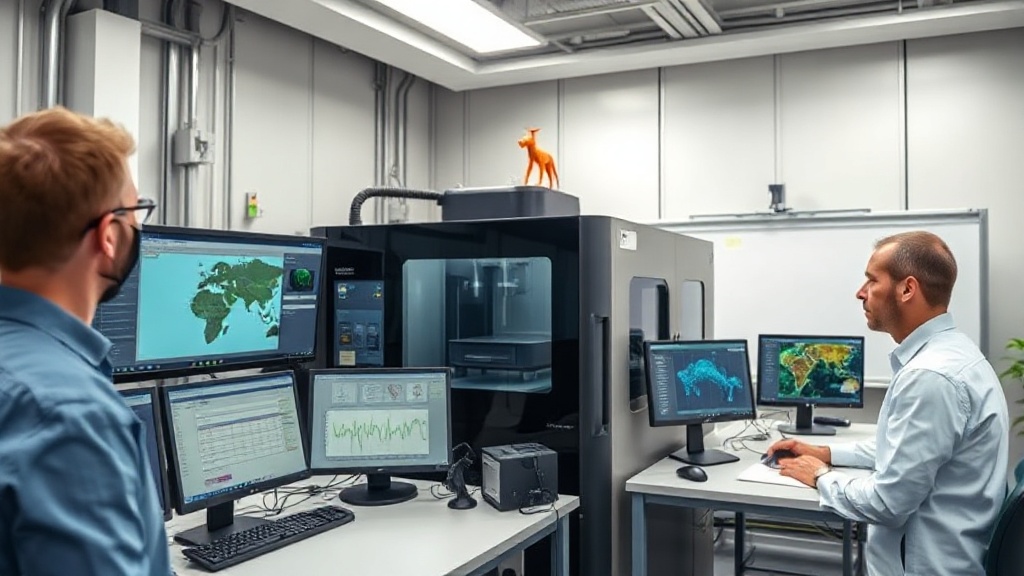

SRNL’s CRAFT Technology Promises New Process Control in 3D Printing
Craft technology in 3D printing is back in the spotlight following news from the U.S. Department of Energy dated June 10, 2026. The CRAFT approach developed by SRNL and its partners aims to deliver smarter control and more reliable outcomes in 3D printing processes. Developments like this demonstrate that 3D printing is rapidly maturing — not merely as a prototyping tool, but across diverse domains such as funding, process control, materials, biocompatibility, maintenance, and high-performance engineering.
Why does this mark an important threshold for the industry?
One of the main barriers to widespread adoption of additive manufacturing is process stability. Every new layer of control can make quality more predictable.
What truly makes a difference in the sector today is not simply whether a technology “works,” but in which usage contexts it delivers sustainable, measurable, and repeatable results. This is why recent industry news increasingly covers not just printer specifications, but also supply chains, quality discipline, application engineering, and business models.
- Low-volume part production in maintenance and modernization projects creates significant value.
- As process control improves, 3D printing becomes easier to justify in the field.
- In retrofit projects, lead time is often more critical than the cost of the part itself.
What does this mean for maintenance, retrofit, and production teams?
Data-driven process control could mean fewer trials, higher repeatability, and lower scrap rates on both the metal and polymer sides in the future.
From what we’ve observed across many projects at Ucuz3D, the reality is this: successful outcomes don’t come from fast printing alone. When the right material, the right geometry, the right use case, and a realistic delivery plan are considered together, 3D printing becomes far more powerful. That’s why when you review our production process approach, it becomes much clearer why application-focused decision-making is critical.
The practical takeaway from this news
What the wave of similar news over the past month has in common is that the additive manufacturing ecosystem is no longer driven solely by a “new technology” narrative. The market is asking increasingly concrete questions: Who does this solution create value for, which costs does it reduce, which cycle does it accelerate, and which quality risks does it mitigate? For precisely this reason, it’s worth reading current 3D printing news not just as news, but as early signals for new business models, supply strategies, and product development methods.
If you’d like to clarify the right 3D printing approach for your project, or technically evaluate your need for functional prototypes or low-to-medium volume production, you can share the details via the quick order page or get an initial framework by reviewing our production pricing.




 Türkçe
 العربية
 Русский
 فارسی
فارسی Deutsch