
Metal-Filled Filament: How to Achieve a Real Metal Look and Weight with FDM
Is it possible to make parts that look like metal, feel as heavy as metal, yet can be printed on an FDM printer? Metal-filled filament is a special FDM material made by adding fine metal powder to a standard PLA or PETG base. It lets you capture the look and texture of real metal parts using desktop printers, without needing industrial metal 3D printing systems (SLM, DED). Here are the realistic expectations, printing tips, and the latest industry developments for this material.
What Is Metal-Filled Filament and How Does It Work?
As the name suggests, metal-filled filament is produced by mixing fine metal powder (copper, bronze, steel, stainless steel) into a binder, usually PLA or PETG. The metal content ranges from 60-80% by weight. This results in a noticeably heavier part compared to standard PLA. For example, a figurine printed with a bronze-filled filament is roughly 3-4 times heavier than the same-sized PLA part. Standard FDM printers can be used for printing, but because of the material’s abrasive nature, a hardened steel nozzle is recommended. Choosing a 0.6 mm or 0.8 mm nozzle diameter instead of 0.4 mm reduces the risk of clogging and provides more uniform extrusion.
Achieving a Real Metal Look with Post-Processing
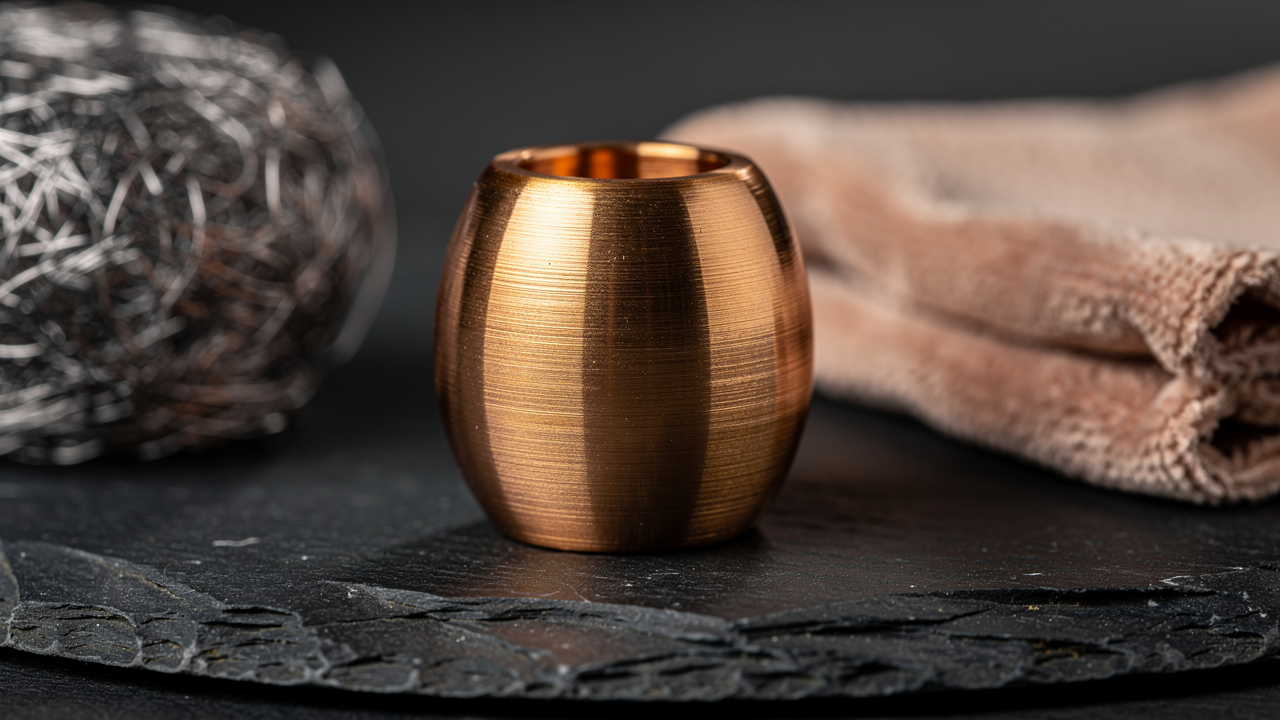
The real magic of metal-filled filament emerges during post-processing. A part that looks matte and slightly rough to the naked eye turns into a true metal surface through sanding and polishing. The typical sequence is as follows:
- Sanding: Gradual sanding from coarse (400) to fine (1000-2000) eliminates the layer lines.
- Polishing: High shine is achieved with cloth and metal polish. A natural patina can also be created on copper and bronze filaments.
- Protection: A clear acrylic spray or wax coating protects the surface against oxidation and moisture.
The result: an elegant, realistic metal appearance achieved at a fraction of the cost of industrial casting or machining. It is ideal for jewelry, badges, figurines, custom boxes, prototype presentation pieces, and even everyday objects like door handles. If you wish, you can find more detailed information in our guide to Wood PLA and metal-filled decorative filaments.
Metal 3D Printing Is Growing in the Industry: VulcanForms’ Massive Facility
While metal-filled filament offers an entry point with FDM, industrial metal 3D printing is also scaling rapidly. VulcanForms aims to create 1,000 jobs by building a million-square-foot facility in Massachusetts. This plant is designed to take vertically integrated metal 3D printing production to mass scale, showing just how much demand for metal parts is growing in sectors such as defense, aerospace, and medical.
The Material Supply Chain Is Strengthening: 6K Additive Expands Capacity
The growth of metal 3D printing is not limited to printers alone. The material supply chain is expanding too. With its acquisition of Uniformity Labs’ assets, 6K Additive has expanded its nickel-based metal powder atomizer capacity. Nickel alloys are particularly critical for aircraft engine, power plant, and chemical process parts that require high-temperature and corrosion resistance. This expansion in the supply chain is paving the way for industrial metal 3D printing.
If you are curious about the most suitable FDM solution for your project, you can review the material option that best fits your needs on our 3D printing service page, calculate the price instantly, and have your decorative parts produced with FDM quality.




 Türkçe
 العربية
 Русский
 فارسی
فارسی Deutsch