
Kömmerling PrintFlow Launches Its New Material for PVC Filament FDM Printing
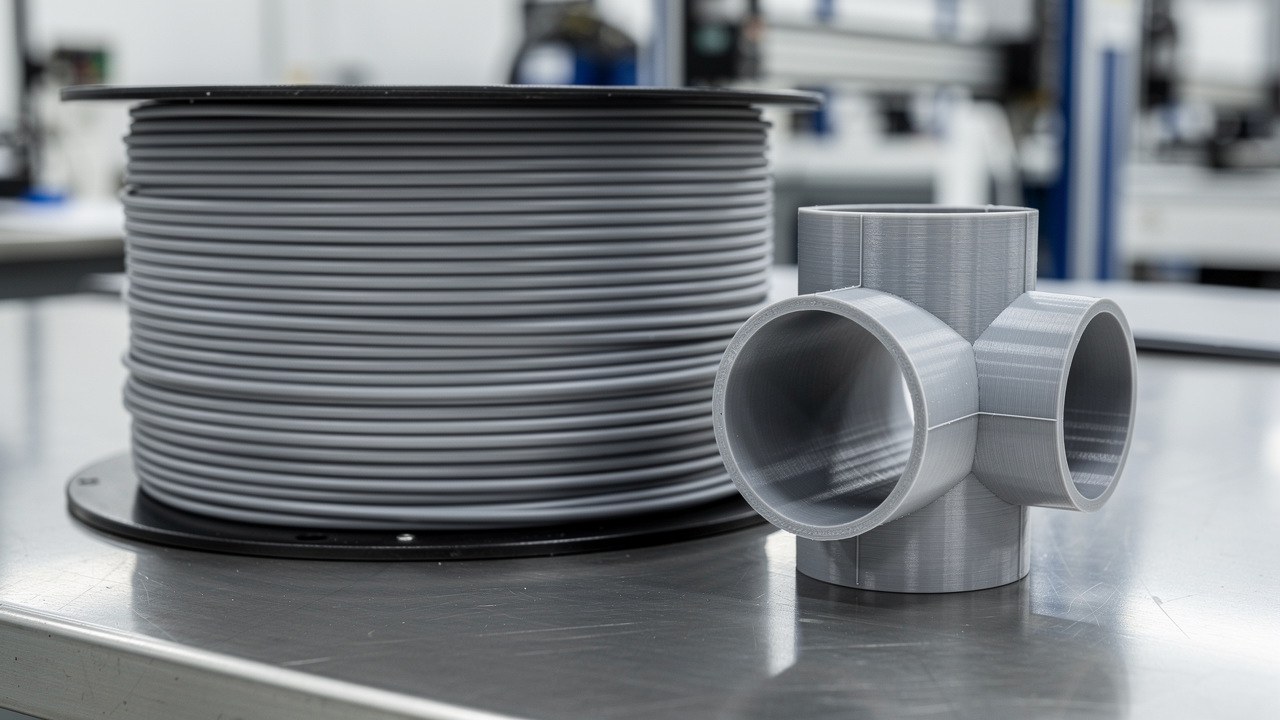
The PrintFlow division of German profile and plastics manufacturer Kömmerling has introduced a significant innovation in the pvc filament fdm printing field, launching a PVC filament developed specifically for FFF/FDM 3D printers. Although PVC (polyvinyl chloride) is one of the most widely used plastics in industry, it has rarely been preferred for FDM printing until now, due to the hydrogen chloride gas released during processing. PrintFlow’s new formulation aims to make PVC accessible for desktop 3D printing by minimizing this safety concern.
PVC filament stands out in particular for its chemical resistance, UV stability and low cost. Far more resistant to acids, bases and solvents than conventional PLA or PETG, PVC offers an ideal alternative for industrial applications, laboratory equipment and outdoor parts. In addition, PVC’s natural flame-retardant property provides an important advantage in areas such as electrical enclosures and safety equipment.
The Potential of PVC Filament in FDM Printing
The PVC filament developed by PrintFlow is suitable for printing on standard FDM printers at temperatures between 220–260 °C. With good layer adhesion and a low warping rate, the material makes printing large parts particularly easy. That said, good ventilation and preferably an environment with a HEPA filter are strongly recommended during PVC printing, because despite all the formulation improvements, PVC can still release trace amounts of gas when processed.
The standout properties of PVC filament can be summarized as follows:
- Chemical resistance: Far more resistant to acids, bases and solvents than PLA and PETG.
- UV stability: Colour fading and material degradation outdoors are as low as those of ABS and ASA.
- Low cost: As a raw material, PVC is more economical than most FDM filaments on the market.
- Flame retardant: Thanks to its natural structure, it is flame retardant without the need for any additional additives.
- Low warping: When printing large parts, there is far less edge lifting than with ABS.
Where Can PVC Filament Be Used?
PVC’s industrial applications are quite broad. Thanks to its chemical resistance, it is suitable for applications such as laboratory equipment, liquid storage containers and pipe fittings. Its UV stability is an important advantage for parts intended for outdoor use, such as fixtures, sensor housings and agricultural equipment. Its flame-retardant property also makes PVC attractive for electrical panel enclosures and electronic box projects.
While we at Ucuz3D do not currently carry PVC filament in stock, we follow these developments in new FDM material options closely. We help you determine the most suitable material for the industrial parts you want to produce with FDM technology. You can find our printing options with engineering materials such as carbon fiber reinforced filament, nylon, polycarbonate and ASA on our engineering materials page. If you are not sure which material is right for your project, you can upload your STL file with our instant price calculator to get both a price and our material recommendations.
Before trying a new material in printing, it is important to know the correct print parameters and ambient conditions. In our Carbon Fiber Reinforced Filaments guide, we explained in detail what to watch out for when printing with special materials — similar principles will also apply to PVC filament.
The arrival of PVC filament in the FDM world looks set to further cement the place of desktop 3D printing in industrial applications by increasing material variety. For projects that require both chemical resistance and low cost at the same time, this new material option is well worth considering.



 Türkçe
 العربية
 Русский
 فارسی
فارسی Deutsch