
How Filament Storage Conditions Affect Print Strength
A part snapping in your hands is rarely a design flaw — it’s usually the result of a material sitting in the wrong conditions for years. The relationship between filament storage and print strength is one of the most underestimated topics in 3D printing. Moisture attacks the bond between layers silently, long before any surface defect becomes visible.
How Does Moisture Reduce Strength?
In FDM printing, strength depends largely on how well layers fuse to one another. When filament absorbs moisture from the air, the molten plastic flows through the nozzle mixed with vaporising water, producing a porous and irregular extrusion. This creates micro-voids between layers. The result — even when printed from the same file and the same settings — is a noticeably more brittle part. For functional parts that will bear loads, this difference is critical.
Which Materials Are Most Susceptible?
All filaments absorb moisture, but some are far more eager to do so. The ones that demand the most attention in storage are:
- Nylon: One of the most moisture-sensitive materials — it can be affected within hours
- PETG: Crackles noticeably when wet and suffers significant strength loss
- TPU: Its flexible structure leads to inconsistent flow when moisture is present
- PLA: More tolerant, but prolonged moisture exposure still causes it to lose strength
What Does Proper Storage Mean?
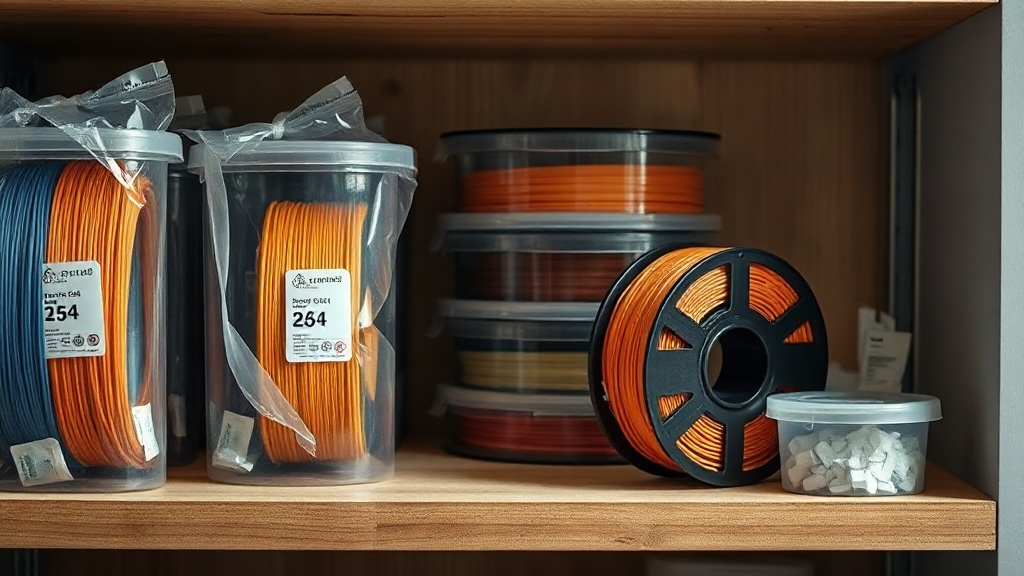
To preserve strength, the goal is simple: keep filament away from moisture. In practice, the following measures work:
- Store filament in airtight containers or vacuum-sealed bags together with silica gel desiccant packets
- Do not leave an open spool on the workbench for days — return it to a sealed environment when not in use
- Dry any moisture-affected spool at the appropriate temperature before printing
These simple habits directly affect how well your parts hold up in everyday use — even if the difference doesn’t show up in a lab test.
In our workshop we store 17 different materials under controlled conditions and dry them when necessary before printing, so the strength of the parts we deliver is never sacrificed to poor material storage. You can review material options and their costs on our production pricing page.
If you want a strong part, half the battle is in the right print — and the other half is in storing the material correctly.


 Türkçe
 العربية
 Русский
 فارسی
فارسی Deutsch