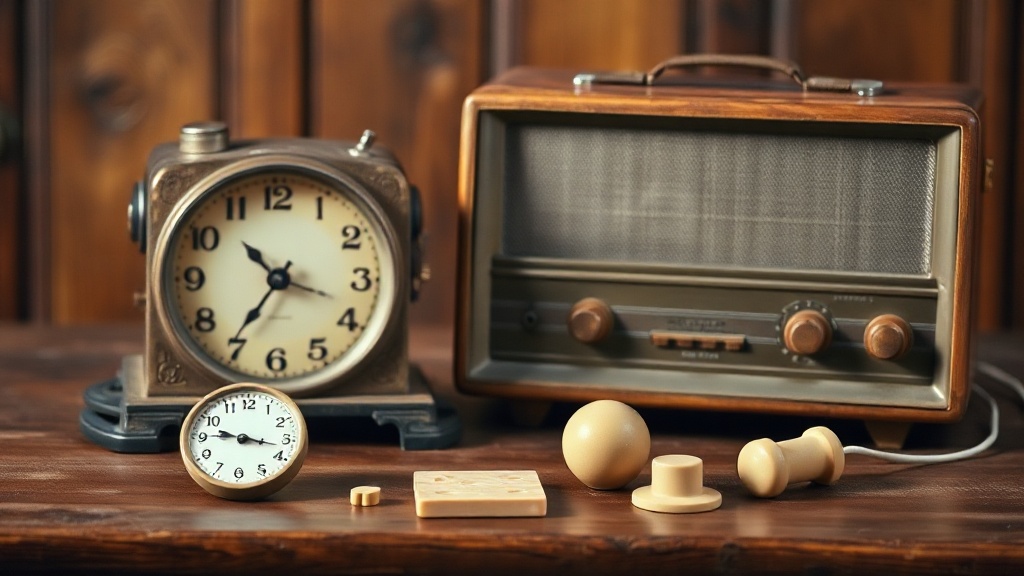

From Antique Clock to Radio: 3D Printing Replacement Parts for Missing Dials and Knobs
The hand on a wall clock passed down from your grandfather may be broken, or the volume knob on an old valve radio may have disappeared years ago. This is exactly where antique spare part printing comes in: it is now possible to reproduce small plastic or Bakelite components that are no longer manufactured and cannot be found anywhere, by working from an existing sample or a photograph.
The completeness of an antique device largely determines its value. A single missing knob ruins its appearance and reduces its usability. Since tracking down the original part is usually impossible, a replica produced to exact measurements becomes the most sensible solution.
Which parts can be reproduced?
The parts most often lost or broken on old devices are typically those that are externally exposed and handled frequently. With 3D printing you can easily reproduce the following:
- Volume and frequency knobs for radios and amplifiers
- Clock dials, hand holders, and numeral segments
- Gramophone arms, record adapters, and reel covers
- Typewriter keycaps and lid latches
- Dial components and handset holders for vintage telephones
What do you need for an accurate replica?
The best source for a solid replica is the matching twin part that is still intact on a symmetrical piece. For example, if three out of four knobs are present, measuring the surviving one is sufficient. If you have no sample at all, clear photographs and measurements in mm go a long way. Details such as shaft diameter, thread pitch, and press-fit tolerances are critical for ensuring the part seats perfectly in place.
Why does material choice matter?
Both appearance and durability are important for antique components. For frequently used, hand-turned knobs, materials that resist impact and wear are preferred. For visible surfaces, options that can be sanded and painted to mimic the original texture stand out. The right material ensures that the new part remains compatible with the device even years down the line.
A restoration-appropriate approach
The goal is not to modernise the part but to preserve the device’s original character. That is why colour, surface texture, and proportions must faithfully match the original. With post-print sanding, priming, and appropriate paint, the part can look as though it has been there for decades. In a good restoration, the highest achievement is for the new part to go unnoticed.
You can share measurements or photographs of the missing part from your antique and request a quote via our quick order page. A single small part is often all it takes to bring that beautiful device back to life from the back of the cupboard.




 Türkçe
 العربية
 Русский
 فارسی
فارسی Deutsch