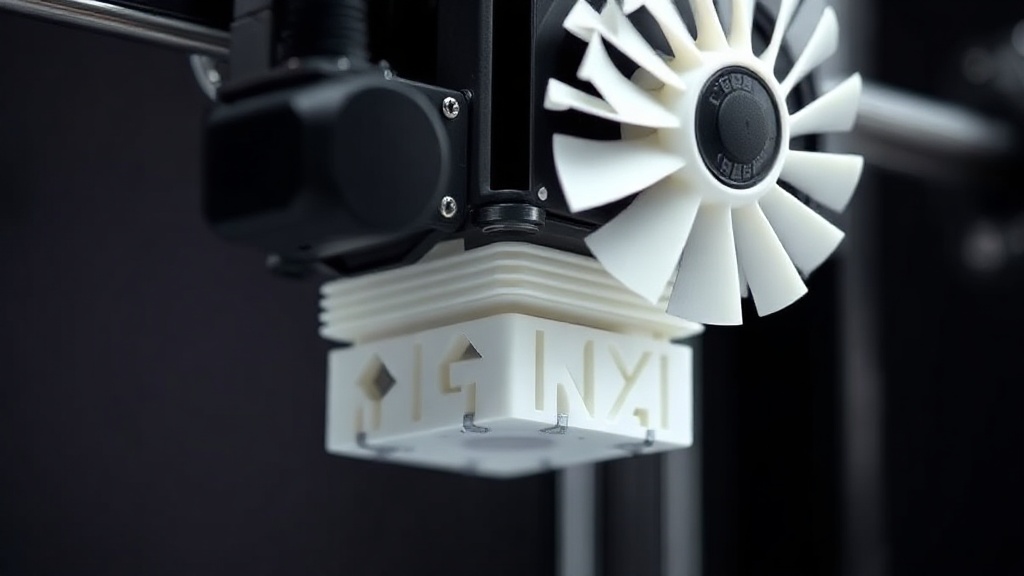

Cooling Fan Upgrade: Improving Bridging and Overhang Quality
If you’ve noticed drooping bridges, curling edges, or rough overhangs, the problem is usually not your slicer settings — it’s that molten plastic isn’t solidifying fast enough. This is precisely where a cooling fan upgrade becomes one of the most impactful interventions for improving bridging and overhang quality. The right airflow freezes the still-soft filament before the next layer arrives.
Why Does Part Cooling Matter So Much?
In FDM printing, the nozzle deposits plastic at its melting temperature. If that plastic is being placed over an unsupported gap (a bridge) or an outward-facing angle (an overhang), gravity will pull it down. Without sufficient cooling, the layer sags. Strong, directed airflow solidifies the melt without distorting its shape.
The general rule: materials like PLA and PETG benefit greatly from aggressive part cooling. ABS and ASA, on the other hand, need minimal fan use — otherwise you’ll see cracking and delamination. Plan your upgrade around the materials you use.
Which Upgrade Should You Choose?
- A more efficient fan duct: For most stock printers, this is the fastest win. A printed duct that directs air toward the nozzle tip makes even the existing fan far more effective.
- High static-pressure fan: In tight ducts, blower (radial) fans outperform axial fans. The 4020 or 5015 blower is a popular choice.
- Dual-sided airflow: Ducts that wrap around both sides of the nozzle cool every surface of the part evenly and reduce single-direction warping.
What to Do on the Slicer Side
After upgrading the hardware, review your software settings too:
- Keep the fan off for the first few layers, then ramp it up gradually.
- Lower bridge speed and set the bridge fan to 100%.
- If the overhang angle is critical, reduce layer height slightly.
These small steps deliver a visible improvement even on overhangs steeper than 45 degrees.
Will You Handle It Yourself, or Leave It to Us?
Upgrades and calibration take time, and every geometry demands its own settings. If you want your part to come out clean — with solid bridges and sharp overhangs — we can handle that on our optimized systems. At our Şile workshop we maintain separate cooling profiles for each material. You can quickly get a quote for your project.
Do you have a design with a tricky overhang or a long bridge? Send us your file and we’ll print it using the best cooling strategy for the job.



 Türkçe
 العربية
 Русский
 فارسی
فارسی Deutsch